WhatsApp AI Agent for Dental Clinics: Fewer No-Shows, a Fuller Schedule
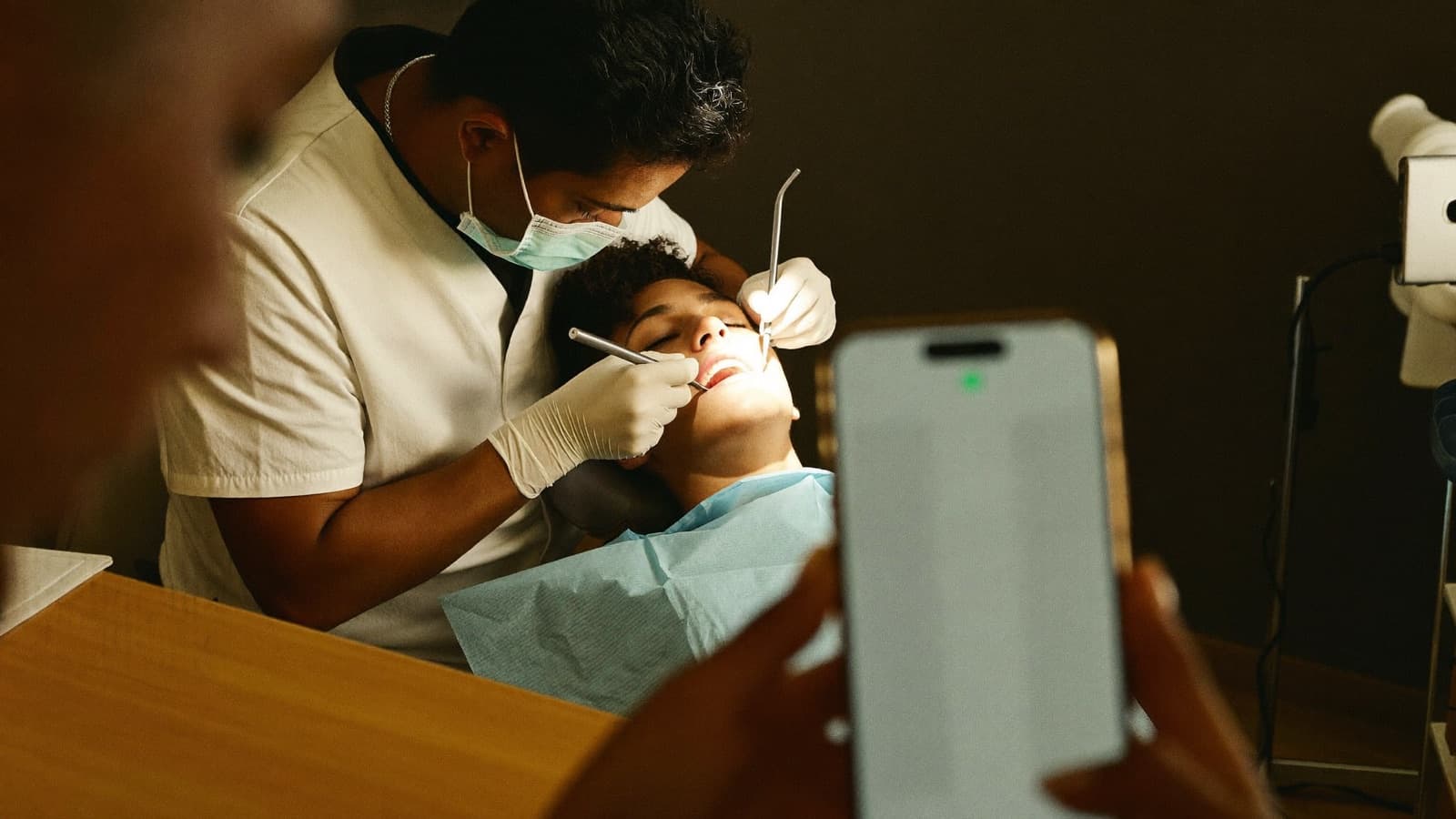
Short answer: a WhatsApp AI agent for your dental clinic or aesthetic practice books appointments 24/7 in Spanish and English, sends automatic reminders that cut no-shows for cents per message, answers the same questions your front desk repeats all day, and collects a new patient's basic information before they walk in. It costs $997 to implement plus support from $150 a month. Everything clinical stays with your team: the agent handles logistics, not dentistry.
And logistics is exactly where the money is leaking.
The money leak: the empty chair
In a dental practice, the product is chair time. Every block on the schedule carries a fixed cost (doctor, assistant, rent, equipment) that gets paid whether the patient shows up or not. A no-show is not just a lost sale: it is a lost sale plus an hour of payroll paid for nothing.
How much is that hole worth? It depends on the procedure, but across the industry a missed appointment typically costs somewhere around $150 to $300, and considerably more if it was a longer treatment. If your practice racks up around 8 to 10 missed appointments a month (a common number for offices that confirm by phone call, when they confirm at all), you are letting thousands of dollars a year slip away over a problem a well-timed reminder can fix.
There is a second, quieter leak too: the new patient who writes on a Saturday night asking "do you take my insurance?" or "how much is a cleaning?". If the answer arrives Monday, that patient already booked with whichever clinic replied first.
What the agent does, conversation by conversation
"I'd like to book a cleaning." The agent checks your real schedule, offers concrete slots ("I have Tuesday 10:00 or Thursday 3:30"), confirms the appointment with a name and phone number, and puts it on your calendar. At 9pm on a Sunday, the same as 10am on a Tuesday.
The reminder that saves the appointment. A day before (and again a few hours before, if you want), the patient gets a message: date, time, address, and two clear options: confirm or reschedule. The patient who would have silently no-showed now reschedules with one tap, and that slot gets offered to someone on your waitlist. These reminders go out as WhatsApp API utility templates, which in the US cost $0.006 per delivered message. Yes: less than a penny to protect a $200 block.
"Do you take my insurance?" "How much is whitening?" "Where do I park?" The agent answers with information you approved: accepted insurances, reference prices, hours, directions, what to bring to a first visit. Replying to a patient who messages you is free within the 24-hour window, so these conversations cost you nothing per message.
The new patient arrives with the homework done. Before the first visit, the agent collects the basics in the same chat: full name, date of birth, reason for the visit, insurance. Your front desk gets everything organized instead of running the questionnaire with the patient standing at the counter.
What the agent does NOT do (and why that is a feature)
This part matters as much as the last one. The agent gives no medical advice, interprets no symptoms, recommends no medications, and does not discuss treatment outcomes. When a patient writes "my tooth has been killing me since last night, what should I take?", the agent does the right thing: it recognizes a clinical question, alerts your team immediately, and hands over the full conversation. After hours, it replies with whatever emergency instruction you define.
In healthcare, an agent that "knows too much" is a liability, not a helper. Ours has the line drawn on purpose: logistics yes, clinical no.
On data: a clinic does not handle patient information casually. What the agent collects, where it is stored, who can see it, and which rules apply to your case (including topics like HIPAA, which you should review with your advisor) are defined with you during implementation, before the agent talks to its first patient.
The numbers for a typical practice
Let's run a conservative count, using typical industry ranges:
| Item | Value |
|---|---|
| Typical value of a missed appointment | around $150 to $300 |
| No-shows per month without effective reminders | typically 8 to 10 |
| Appointments recovered via reminders and rescheduling | even just 4 a month |
| Revenue recovered per month | around $600 to $1,200 |
| Agent cost (month 1) | $997 + $150 |
| Agent cost (month 2 onward) | $150 to $600/mo |
Recover about 4 appointments a month and the agent pays for itself within the first month or two, then turns profit. That is before counting the new patients who book at 9pm instead of drifting to a competitor, or your front desk's hours: between confirmation calls, the same 10 questions, and reschedule ping-pong, a typical front desk gets several hours a week back for the patients actually in the waiting room.
If you want to compare options and see the whole market, here is our breakdown of how much a WhatsApp AI agent costs in the US: from DIY tools at $50 to $300 a month up to agencies charging $1,000 to $5,000 monthly.
Why WhatsApp and not phone calls or portals
Because your patient is already there. Hispanic patients in the US use WhatsApp as their main channel with businesses they trust, and nobody wants to create a patient portal account just to ask about an opening. Confirmation calls have their own problem: people no longer answer unknown numbers. A WhatsApp message gets read, and replying "confirmed" takes two seconds.
One ecosystem detail: Meta paused marketing templates for US numbers in April 2025, but that does not affect this use case. Reminders and confirmations are utility templates, which keep working as usual and cost cents.
How to start
- The official WhatsApp Business API (Meta Cloud API) on your clinic's number. We set it up as part of the implementation.
- Your information in writing: services and reference prices, accepted insurances, hours, cancellation policies, and the questions your front desk answers every single day.
- Your calendar or scheduling system to connect real availability.
With that, implementation takes 1 to 3 weeks, including tests with real conversations and the patient data handling conversation.
The complete agent costs $997 with support from $150 to $600 a month depending on your practice's volume. If you would rather start with a diagnosis of what to automate first (appointments, reminders, billing, patient reactivation), the $97 Automation Map answers that with numbers. And if you want to feel what your patient would feel, message the WhatsApp button on this site: the thing that answers is the same agent we would install in your clinic.